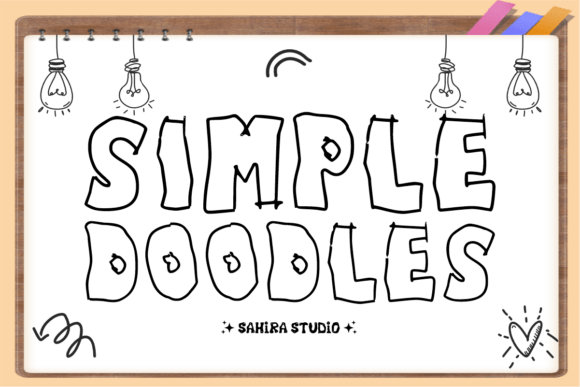
Simple Doodles: Strategic Typography for Authentic Communication
Typography is more than just choosing a font—it's about conveying tone, intent, and personality. Simple Doodles stands out as a bold, hand-drawn typeface that mimics spontaneous notebook sketches. Its thick, uneven strokes and sketchy charm offer a tactile, handmade feel that resonates with audiences seeking authenticity. But beyond its visual appeal, this font can be a strategic tool when used with intention.
Why Simple Doodles Works Beyond Aesthetics
The appeal of Simple Doodles isn't just in its whimsical appearance—it's in how it aligns with broader communication goals. In a world saturated with polished digital design, a font that feels handcrafted and personal can cut through the noise. This makes it especially valuable for educators, creators, and brands aiming to connect on a more human level.
Strategically, it supports initiatives that prioritize engagement through relatability. For example, a teacher designing a worksheet or a small business creating a poster for a local event can use Simple Doodles to signal approachability and creativity. It's not just about looking casual—it's about feeling accessible.
Use Cases That Deliver Real Results
- Educational materials: From flashcards to classroom signage, Simple Doodles enhances learning by making content feel less formal and more engaging.
- Children’s content: Whether for book illustrations or activity sheets, the font’s playful nature appeals directly to young learners.
- Branding for creative businesses: Designers, illustrators, and craft-based brands can use the font to reflect their hands-on, artisanal approach.
- Internal communication: Teams working on brainstorming or early-stage planning may find the font useful for setting a relaxed, collaborative tone in documents and presentations.
Planning with Purpose: When to Use Simple Doodles
Before incorporating Simple Doodles into your design toolkit, consider the context and audience. This font thrives in environments where formality isn’t the priority. It works best when your message benefits from a sense of spontaneity or warmth.
For instance, a marketing campaign targeting parents of young children might benefit from using Simple Doodles in social media graphics or downloadable activity packs. However, the same font would likely undermine a corporate annual report or legal document where clarity and professionalism are paramount.
Ask yourself: does the font support the emotional tone you want to convey? If the answer is yes, then you're on the right track.
Designing with Intention: Practical Tips
- Pair with clean, structured fonts: To maintain readability and visual balance, pair Simple Doodles with a sans-serif or serif font for body text.
- Limit usage to key elements: Use it for headings, titles, or callouts rather than long-form text to preserve legibility and impact.
- Test across platforms: Ensure the font remains clear and consistent when viewed on different screens, especially for digital content.
- Align with brand identity: If your brand voice is playful and hands-on, Simple Doodles can reinforce that perception. If not, consider a more neutral typographic approach.
Understanding the Risks of Random Typography
One of the most common missteps in design is using a font like Simple Doodles without a clear strategic purpose. While it may seem like a fun choice, deploying it without considering the broader message can dilute professionalism or confuse your audience.
For example, a financial services startup using Simple Doodles on its website might unintentionally signal a lack of seriousness or expertise. Similarly, an e-learning platform targeting adult learners might find the font feels out of place in instructional materials.
The key is to avoid treating typography as an afterthought. Every design element, including font choice, should be part of a deliberate communication strategy.
Long-Term Value Through Strategic Consistency
Fonts like Simple Doodles gain long-term value when used consistently within a visual system. If you're building a brand around creativity, learning, or community, this font can become a signature element of your identity.
Consider how educational influencers, children’s book authors, or craft-based businesses use Simple Doodles across their websites, social media assets, and print materials. Over time, this consistency builds recognition and trust.
However, consistency must be paired with clarity. Ensure that the font supports—not overshadows—the content it presents. This requires ongoing evaluation of how your audience receives your visual messaging and whether it aligns with your goals.
Final Thoughts: Typography as a Strategic Tool
In the hands of a thoughtful designer or content creator, Simple Doodles becomes more than a font—it becomes a communication asset. It allows you to infuse personality into your work while maintaining strategic alignment with your goals, audience, and brand identity.
Whether you're designing a classroom activity, a creative brand identity, or a digital product for young users, Simple Doodles offers a unique opportunity to stand out through authenticity. The key is to use it intentionally, not impulsively.
Typography shapes perception. When chosen with care, it supports your message, strengthens your brand, and enhances the experience of your audience. With Simple Doodles, you have the chance to do just that—provided you approach it with strategy, not just style.