Darker Brighter: A Minimal Font with Maximum Impact
When it comes to typography, simplicity often speaks the loudest. Darker Brighter is a clean, minimal font that manages to stand out precisely because of its restraint. Designed for clarity and adaptability, it’s the kind of typeface that can fit seamlessly into a wide variety of design contexts without demanding attention for its own sake. Whether you're crafting a brand identity, designing a website, or laying out editorial content, Darker Brighter offers a quiet confidence that enhances visual communication without overshadowing the message.
Understanding the Design of Darker Brighter
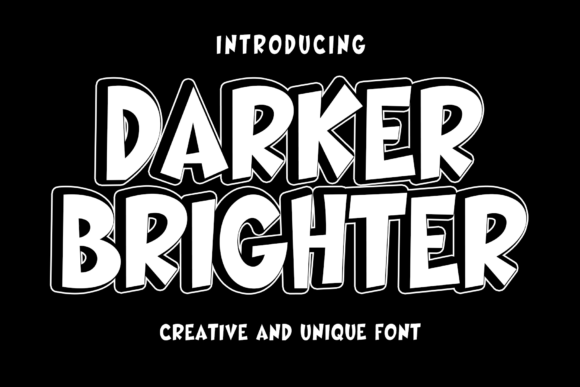
At first glance, Darker Brighter presents itself as a modern sans-serif with a balanced structure. Its letterforms are open and uncluttered, featuring subtle weight transitions that contribute to its legibility across different sizes and mediums. The font’s minimalism is not just aesthetic—it serves a functional purpose by ensuring readability in both digital and print formats. Each character is carefully constructed to maintain visual harmony, making it a reliable choice for long-form text as well as headlines.
Key Characteristics That Set It Apart
- Neutral yet distinctive: While it avoids excessive stylization, Darker Brighter still carries a unique visual identity that sets it apart from generic system fonts.
- High legibility: Designed with clear counters and open spacing, it remains readable even in smaller sizes or on lower-resolution screens.
- Consistent rhythm: The even spacing and measured proportions create a steady visual flow, especially in body text.
- Scalable performance: Maintains clarity and definition whether used in mobile interfaces or large-format print.
Practical Applications for Designers and Creators
Darker Brighter’s versatility makes it a strong contender for a wide range of creative projects. It works especially well in environments where clarity and professionalism are key. For example, digital marketers might find it effective for landing pages and email campaigns where readability contributes to higher engagement. Similarly, bloggers and content creators can use it to ensure their text remains accessible without sacrificing visual appeal.
Branding professionals may appreciate how Darker Brighter can be used across both logotypes and supporting materials. It’s subtle enough to pair with more expressive display fonts while still holding its own in a minimalist design system. In editorial design, it performs well in both print and digital publications, offering a clean reading experience that doesn’t fatigue the eye.
Who Benefits Most from Using Darker Brighter?
Designers who value clean aesthetics and functional typography will find Darker Brighter particularly useful. This includes:
- Web designers building modern, responsive sites that prioritize readability and performance.
- Brand strategists developing identities that lean into minimalism and timelessness.
- Print designers working on materials like reports, whitepapers, and brochures where clarity is essential.
- Content creators and educators who need readable, visually balanced type for presentations or digital documents.
Real-World Performance and Usability
In practical use, Darker Brighter holds up well across different platforms and formats. On the web, it loads efficiently and renders clearly on both high and standard resolution displays. For print, its crisp lines and balanced spacing ensure that it remains legible even when printed at smaller sizes or on lower-quality paper stock.
One area where Darker Brighter truly shines is in long-form content. Whether used in a blog post, case study, or technical document, it supports extended reading without causing visual strain. This makes it a solid choice for publishers and educators who need to present information in an approachable, professional format.
Flexibility and Pairing Options
One of the font’s strongest attributes is its ability to work well with other typefaces. Because of its neutral structure, it pairs easily with both serif and sans-serif fonts, allowing designers to create layered typographic hierarchies without visual conflict. For instance, using Darker Brighter as a body text font with a more expressive headline font can create a compelling contrast that guides the reader’s eye naturally through the content.
Potential Limitations to Consider
While Darker Brighter is a strong performer in most scenarios, it’s not necessarily the best choice for every project. Because of its minimalist design, it may not be the ideal fit for brands or creative works that require a bold, expressive, or highly stylized typographic voice. Additionally, while it works well in Latin-based languages, designers working with multilingual content should verify character set support before committing to the font.
Long-Term Value and Reliability
Typography trends come and go, but Darker Brighter’s design suggests it will remain relevant for years to come. Its clean, modern aesthetic aligns with current design sensibilities while avoiding the kind of overt styling that can quickly date a project. For professionals working on long-term branding or publishing efforts, this kind of consistency is invaluable.
From a technical standpoint, Darker Brighter is well-structured and well-supported across major design tools and platforms. Its reliability in rendering and performance makes it a safe, effective choice for both personal and professional use.
Final Thoughts: When Darker Brighter Makes Sense
If you're looking for a font that combines clarity, elegance, and adaptability, Darker Brighter is worth serious consideration. It’s especially well-suited for professionals who need a dependable typeface that supports a wide range of applications without compromising on quality or aesthetics. Whether you're building a brand, designing a website, or preparing editorial content, this font offers a quiet strength that enhances your work without overpowering it.